
The Dens → Tigers
TIGER SCOUTS
Explore together. Grow together.
First grade
Tiger Scouts takes the excitement of Lion Scouting and opens the door to a wider world. First graders are ready for longer activities, bigger questions, more teamwork, and greater responsibility—but they still experience Scouting alongside an adult partner.
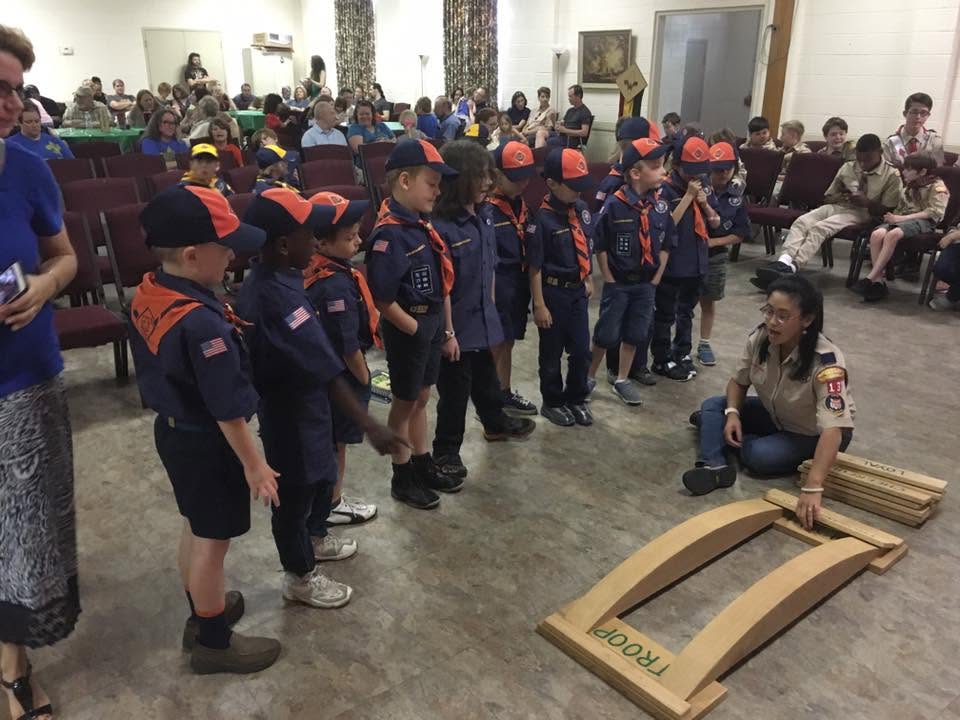
Tigers hike, cook, play, build, serve, investigate, and learn practical skills. Every Adventure is designed to help children become more confident while strengthening the bond between Scout and adult.
AT A GLANCE
Grade: First grade
Recognition: Tiger rank badge and adventure loops
Advancement: Six required Adventures and at least two electives
Family participation: Every Tiger attends with a parent or designated adult partner.
Like Lions, Tigers are required to have an adult partner present at meetings and activities. Tiger dens commonly use a shared-leadership model in which families help the den leader deliver activities during the year.
REQUIRED TIGER ADVENTURES
Character and leadership
Bobcat
Tigers get to know their den, say the Scout Oath together, hear and discuss the Scout Law, and demonstrate what it means to be trustworthy, helpful, or friendly.
They also learn the Cub Scout sign, salute, and handshake and share an example of doing their best. The Adventure creates a common identity while keeping the lessons concrete and appropriate for first graders.
The outdoors
Tigers in the Wild
Tigers identify the Cub Scout Six Essentials, learn the Outdoor Code, and take an exploratory walk with their den, pack, or family.
During the walk, they look for natural and human-made features, observe local animals, and begin learning how Scouts enjoy the outdoors responsibly.
Personal fitness
Tiger Bites
Tiger Bites introduces the five food groups, proper handwashing, healthy eating, physical activity, and good rest.
This Adventure turns everyday habits into hands-on learning. Tigers may sort foods, prepare a simple snack, practice hygiene, or participate in movement activities that show how food, exercise, and sleep work together.
Citizenship
Team Tiger
Tigers discover that they belong to many teams: their family, den, classroom, neighborhood, and pack. They choose a useful job, follow through, play team games, and talk about what makes someone a good teammate.
The lesson is simple and powerful: being part of a team means contributing, cooperating, and helping others succeed.
Personal safety
Tiger’s Roar
Tiger’s Roar helps first graders practice ways to stay safe, recognize uncomfortable situations, identify trusted adults, and use personal safety gear.
The activities are practical and positive. Tigers build confidence by learning what they can do rather than becoming anxious about everything that might go wrong.
Family and reverence
Tiger Circles
Tigers explore their family’s beliefs, celebrations, traditions, and expressions of reverence. Families complete important portions of this Adventure together.
The experience may include creating art, discussing family traditions, attending a service or meaningful gathering, or completing a religious emblem program chosen by the family.
TIGER ELECTIVE ADVENTURES
Tiger electives offer an especially broad mix of classic Scouting and modern interests:
- Fish On — Learn about fish and go fishing.
- Let’s Camp — Prepare for and enjoy an approved Cub Scout camping experience.
- Rolling Tigers — Learn bicycle skills and safety.
- Tigers in the Water — Develop swimming confidence and water safety.
- Champions for Nature — Participate in conservation.
- Curiosity, Intrigue, and Magical Mysteries — Experiment with codes, demonstrations, and seemingly magical science.
- Floats and Boats — Explore boats, flotation, and water safety.
- Designed by Tiger — Imagine, plan, build, and improve a creation.
- Safe and Smart — Practice emergency and home-safety skills.
- Sky Is the Limit — Observe stars and discover astronomy.
- Stories in Shapes — Explore art, geometry, and visual design.
- Tech All Around — Notice how technology is used in everyday life.
- Tiger Tag — Play active games and practice good sportsmanship.
- Tiger-iffic! — Play individual, partner, and team games.
WHAT A TIGER MEETING FEELS LIKE
Tiger meetings remain active and family-centered, but Scouts begin taking a little more ownership. They may demonstrate a skill, help choose a game, carry their own Six Essentials, complete a job for the den, or explain what they observed.
Expect a combination of movement, making, discussion, and discovery rather than a school-style lesson.
WHAT PARENTS SHOULD EXPECT
Tiger adult partners are participants. During the year, parents may help lead a game, arrange a visit, bring supplies, teach a simple skill, or coordinate an outing.
The den leader provides direction and resources, so families are not expected to invent a program from scratch.
At home, the best support is to:
- Ask your Tiger to explain what they learned.
- Let them perform their own age-appropriate tasks.
- Practice skills together.
- Complete family-based requirements promptly.
- Celebrate effort, improvement, kindness, and participation.
BY THE END OF THE TIGER YEAR
Tigers are likely to have:
- Packed and used the Cub Scout Six Essentials.
- Participated in outdoor walks and observations.
- Practiced teamwork and household responsibility.
- Learned basic nutrition and hygiene.
- Played games as both competitors and good sports.
- Explored safety, nature, technology, or science.
- Become more comfortable speaking and participating within their den.